I rarely base my predictions in politics on hope. After all, I have often said, hope is not a strategy. Even Gina Miller now says it after I worked for her as her Campaign Manager before I found out that she counts Richard Tice and Isabel Oakeshott as ‘besties’! I have however been musing upon various possible political scenarios in the short term, i.e. Farage’s Fall colliding with the Burnham Bounce and Brexit decline. There are a lot of ifs in this scenario, but hear me out. With thanks to Greg Newman for the snappy title and wise inputs.
Farage’s Fall
Many moving parts are coming together in NFs faulty decision to call a referendum on his integrity via the Clacton by-election. It is feasible that NF could be badly damaged by the various parties standing against him. We are there to make sure this happens. We are the only serious party standing in Clacton and are already inflicting serious damage on the NF brand. See Bin Brexit. Regardless of this, NF will continue to face scrutiny over the £5 million “donation” and many other legal challenges in the coming months. His star appears to be receding. We know that once people lose faith, the only way is down. There have been relatively few phoenix-like rises from the ashes in politics, with Churchill, Wilson and Trump being notable exceptions.
Burnham’s Bounce
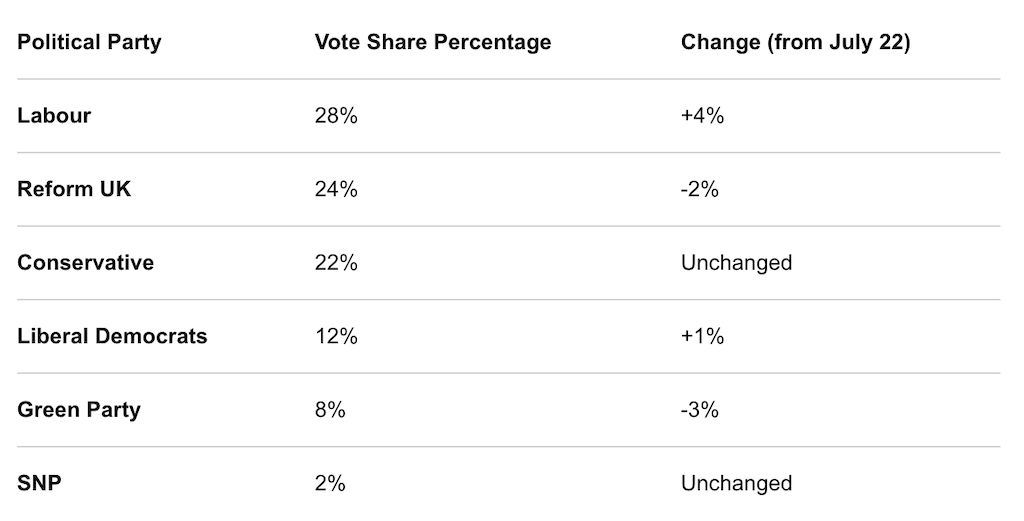
There are already signs of a Burnham Bounce and we are only a week into his premiership. If only because the Labour Party have rallied round him out of guilt over their decision to assassinate Keir Starmer before his decisions fed through to people’s lived experiences. Burnham will undoubtedly benefit from Starmer’s legacy. But we live in a world where people expect instant results on complex issues. The real questions are how big the Burnham Bounce will be and, even more importantly, how long will the Burnham Bounce last?
Andy began his premiership with a series of outlandish promises. These are unlikely to survive contact with real life, unless … He either inflicts a lot of pain on the electorate via taxation and borrowing, or confronts the elephant in the room aka Brexit. Brexit costs Britain £240 bn pa, £93 bn of which we could recover by applying to Rejoin the EU. Unlike Keir Starmer, it is unlikely that Burnham’s honeymoon period will be two years. It will more likely be measured in months. Burnham also has no mandate from the people to vary the Labour manifesto. This presents an intriguing scenario which I’ve called Crossing the Chasm or “Supersonic” – minor nod to the Gallagher brothers.
Supersonic
Let’s suppose that Farage’s star continues to fall. Let’s also suppose that Burnham calculates that his bounce will be short lived and that “peak Burnham” is probably autumn / winter 2026. He could go to the nation to call a general election using his honesty platform by saying :
“Look, I know I was not elected by the people of Britain and I promised I will do things differently. I need your mandate to go forward to fund the great changes we plan to make. Not by making your lives harder, but by seizing the opportunities for sustainable growth. I need your approval to build a better Britain in a better Europe for a better World. We’ll do this by ending our toxic relationship with Brexit, cutting the red lines that are costing us hundreds of billions every year and seizing the opportunities that can come from a Reformed relationship with Europe”. He might even channel Oasis by saying “Don’t look back in anger” 🙂
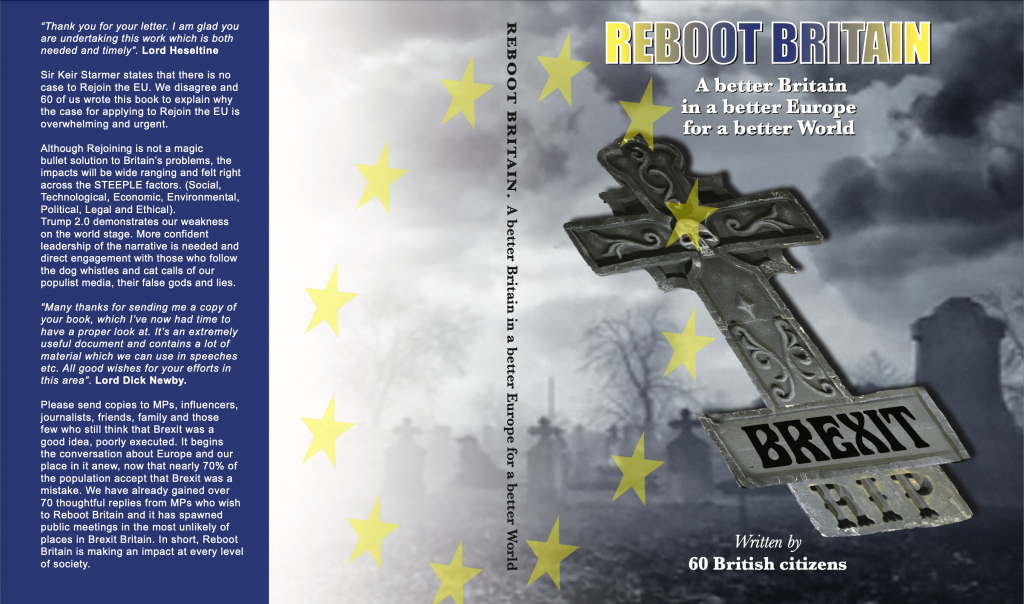
Andy would offer a simple manifesto promise to apply to Rejoin without another toxic referendum, capitalising on people’s acceptance that Brexit has been an unmitigated disaster, also avoiding people’s aversion to another national psychodrama by wrapping it into an election.
Champagne Supernova
Critics will say “Theresa May”. In fact one senior Labour member friend of mine has already said that, putting party before country. This, of course, is how we got into ths mess. My tongue in cheek reply is in green below. I could not help quoting the band “Journey” !! 🙂 I understand his point of loyalty, after all that is what parties and party members do, but without radical actions to match radical words, I fear that the Burnham Bounce will be short lived. Andy would be living the value of improving democracy by asking the nation to back him. Labour has already adopted the process we started in Somerset, for a national conversation about a better Britain. Burnham would be seen as not falling into the oft quoted trap of “They’re all the same”.
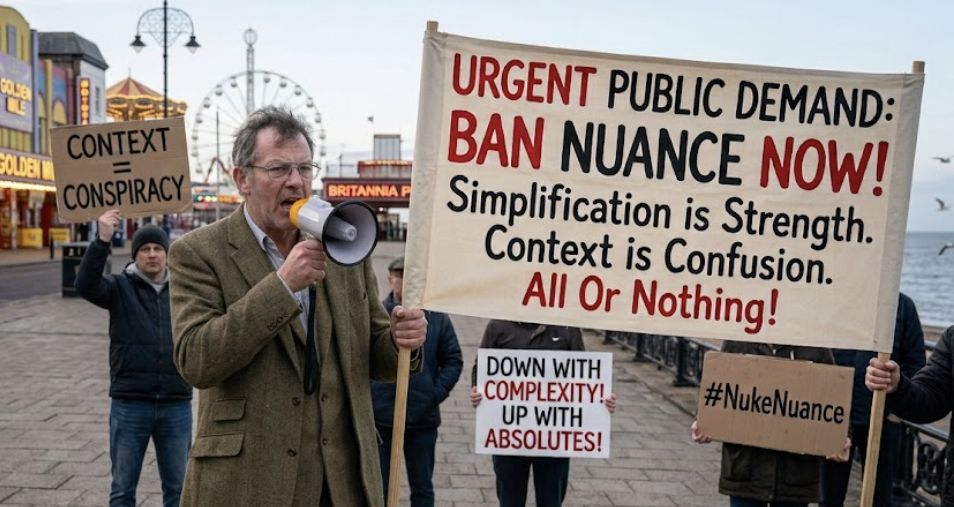
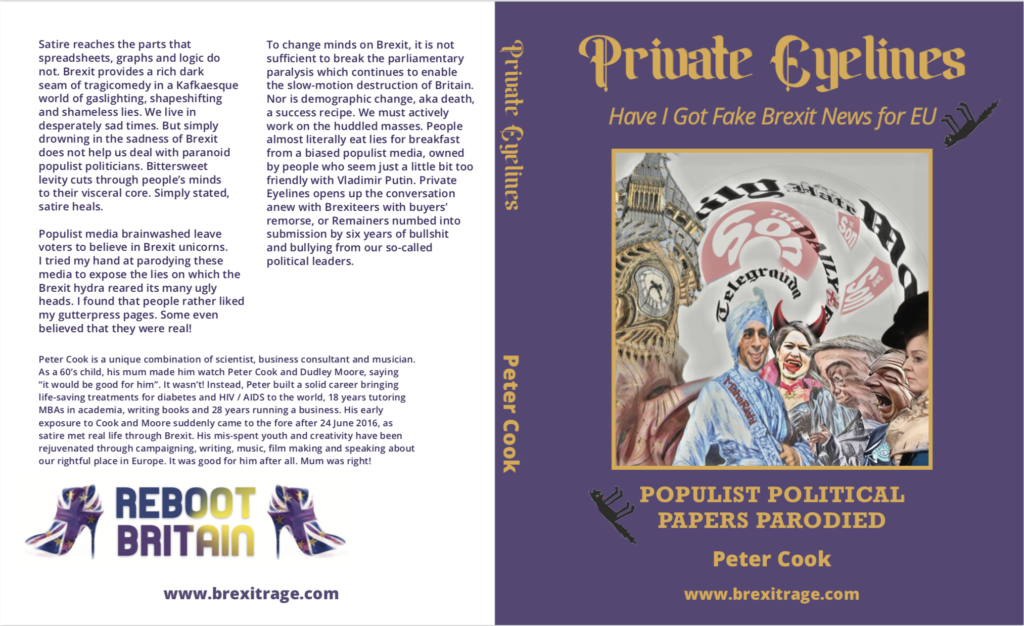
Illogical Politics is the brainchild of a friend. He uses satire to unseat the lies of far right politicians such as Reform, Restore, UKIP, Advance, Raise the Standard, Logical Politics, The Heritage Party, The EDL / BNP / National Front (aka Tommy Robinson aka Stephen Yaxley Lennon) et al. Written in the spirit of “Private Eyelines” which we pioneered in 2020, the posts cut through in ways that graphs and spreadsheets do not. Here’s an example article:
Illogical Politics
BAN NUANCE
The metropolitan elite have activated their newest weapon against the hardworking British public: “Nuance.”
Whenever we demand absolute, immediate, three-word solutions to incredibly complex, centuries-old geopolitical and economic crises, the so-called “experts” immediately start droning on about “grey areas,” “underlying socio-economic factors,” and “unintended consequences.”
Let us be brutally honest.
Real patriotism is entirely binary.
It is black and white.
Good and evil.
Us and them.
“Nuance” is just a woke liberal buzzword for “I don’t love my country enough to blindly yell about it.”
The Danger of ‘Understanding Both Sides’:
The establishment wants to pacify us by suggesting that major global issues require careful consideration and delicate diplomacy.
This is an insult to our intelligence.
We do not want carefully weighed options; we want a scapegoat and a catchy rhyming chant.
Here is our official blueprint for completely eradicating nuance from the national conversation:
The Three-Word Maximum:
If a government policy cannot be entirely summarised by three aggressive words shouted over the noise of a pub fruit machine, it is a globalist trap.
“GET IT DONE.”
“STOP THE THING.”
“DO THE STUFF.”
Anything longer than this is basically an academic thesis and must be rejected at the ballot box.
Context is Censorship:
When a politician claims their disastrous quote was “taken out of context,” what they actually mean is “I am furious that you aren’t listening to my boring, 20-minute explanation.”
We assert our sovereign right to react purely to the most inflammatory six words of a headline without reading the article.
Abolish the ‘Grey Area’:
Grey is the colour of cloudy skies, depressing concrete, and Brussels bureaucracy.
There are no grey areas in common sense.
You are either entirely right (us) or actively trying to destroy the very fabric of society (anyone who disagrees with us).
The Beer Mat Standard:
We will formally replace the Civil Service with a stack of damp cardboard beer mats.
If an international trade agreement or a comprehensive healthcare reform strategy cannot fit legibly on a single mat, we simply tear it up and default to World Trade Organisation rules.
Defend Your Right to Simplicity:
The tofu-eating, Guardian-reading intelligentsia want you wasting your weekends reading complex policy papers and “considering the historical context.”
Do not fall into their intellectual traps.
They want to dilute your pure, unyielding anger with highly inconvenient facts.
We demand leaders who refuse to understand the details.
We demand absolute certainty in the face of overwhelming contradictory evidence.
Say NO to nuance.
Say NO to reading past the headline.
Stay loud, stay simple, and let’s just get on with it! 🇬🇧🔥
Adrian, a business advisor, freelance lecturer on international business and entrepreneurship and provider of due diligence services, has written this absolutely brilliant fact check of the comments made at the leaders’ debate we organised recently. I had puposely not wished to use our airtime to go down Leave rabbit holes and many of the online comments made at the time did seek to correct the inaccuracies and disinformation. But Adrian’s piece goes well beyond the time available at the time. Thank you so much. I remain grateful to Bob for conducting a cordial debate when others prefer GBH as a weapon of change. Find the You Tube video here and Adrian’s fact check below. It’s a long read but well worth it.
Dear Peter – It takes effort for me to do the back up research there are a number of factual claims by Bob Lidden and Co that can be checked. Some are matters of opinion (which can’t really be fact-checked), while others are objective claims that can.
Claim
Assessment
Notes
Labour is secretly trying to reverse Brexit by stealth
❌ Opinion/speculation
Political interpretation rather than a factual claim.
The EU Partnership Bill allows rejoining parts of the Single Market without parliamentary legislation
⚠️ Needs verification
This is a legal claim that can be checked against the Bill.
Labour won only 33% of the vote in 2024
✅ Correct
Labour received about 33.7% of votes.
OBR predicted a 4% GDP loss based on assuming 0.25% lower productivity growth per year
⚠️ Partly misleading
The OBR does estimate around a 4% long-run reduction in productivity/GDP from Brexit, but this isn’t simply “made up”—it’s based on extensive trade/productivity literature rather than a single arbitrary assumption.
Recent studies claiming an 8% GDP loss are flawed because they compare the UK mainly with the US
⚠️ Misleading
Depends on which study he means. Most modern estimates use synthetic control methods and compare the UK with many advanced economies.
Public sector plus “state-directed” companies now account for 60–65% of the economy
❌ No evidence
This appears to be his own estimate. I know of no official source supporting this figure.
UK is approaching Soviet levels of state control
❌ Opinion/hyperbole
Not a factual claim.
European Commission makes the laws, not the European Parliament
❌ Misleading
The Commission proposes legislation, but legislation normally requires approval by both the European Parliament and the Council of Ministers.
Citizens cannot “sack” the European Commission
⚠️ Partly true
Commissioners are not directly elected, but they are nominated by elected governments and approved by the elected Parliament, which can also force the Commission to resign via a motion of censure.
Lisbon Treaty created the EU as a sovereign nation
❌ False
The Lisbon Treaty did not create a sovereign state. It amended the treaties governing an international organisation. Member states remained sovereign under international law.
Eurozone countries have no feasible legal route to leave the euro
⚠️ Mostly true
There is no explicit treaty mechanism for leaving only the euro while remaining in the EU.
Around 70% of UK laws came from the EU
❌ False / greatly exaggerated
Multiple studies have found much lower figures. Estimates vary enormously depending on methodology, but 70% has repeatedly been criticised as inaccurate.
ECB exceeded its mandate buying government bonds
⚠️ Disputed
German constitutional lawyers argued this. However, the Court of Justice of the European Union ruled the programmes were lawful and within the Treaties.
UK led the international response to the 2022 invasion of Ukraine because it was outside the EU
⚠️ Opinion mixed with fact
The UK was certainly one of the leading supporters of Ukraine, but it’s speculative to say this was only possible because Brexit had occurred.
Two particularly weak claims
These stand out as the least supported:
1. “70% of UK laws came from the EU.”
This is an old Eurosceptic statistic that has been repeatedly challenged by constitutional scholars. Depending on how one counts legislation, estimates have ranged from under 15% to around 50%, but 70% is generally regarded as an exaggeration.
2. “The Lisbon Treaty created the EU as a sovereign nation.”
This is simply incorrect.
The Lisbon Treaty:
amended existing treaties;
gave the EU legal personality;
did not abolish the sovereignty of member states;
explicitly recognised that powers not conferred on the EU remain with the member states (principle of conferral).
Even strong critics of the EU usually describe it as a supranational organisation, not a sovereign country.
Claims that deserve a careful look
Some of his economic arguments are more nuanced than simply true or false.
For example, when he criticises the OBR’s estimate of a roughly 4% long-run reduction in UK productivity/GDP after Brexit, he’s right that it’s a model-based projection rather than an observed fact. However, it’s misleading to imply the figure is arbitrary: the OBR’s estimate is grounded in a substantial body of empirical research linking trade openness and productivity.
Similarly, his criticism of the “8% GDP” estimate depends entirely on which study he’s referring to. Some recent studies do use sophisticated synthetic-control methods rather than simply comparing the UK with the US, so dismissing them as “just comparing us to America” would not fairly represent their methodology.
If you’re trying to assess Bob Lidden as a speaker, I’d say his presentations combine:
factual statements that are broadly correct,
disputed interpretations presented as facts,
and a number of assertions for which little or no supporting evidence is provided.
I can also go through the transcript line by line, rating every factual claim as True / Mostly true / Misleading / False / Opinion, with references explaining each judgement. That produces a much more comprehensive fact-check.
yes please
Absolutely. I’ll treat it as I would a policy institute report: separating fact, interpretation, opinion, and unsupported assertion. I’ll also indicate where there is a genuine academic debate rather than one side simply being wrong.
Overall impression
Bob Lidden is clearly knowledgeable about banking and monetary policy, but throughout this discussion he often:
states contested interpretations as settled facts;
omits important context;
mixes legal facts with political opinion;
occasionally makes claims that are simply unsupported by evidence.
I’d probably score the factual reliability around 6/10. Much of what he says has a kernel of truth but is often overstated.
00:36
“Reset equals rejoin.”
Verdict: ❌ Opinion
This is political rhetoric.
The UK-EU “reset” announced by Labour is not rejoining the EU.
Whether it is a stepping stone towards rejoining is speculation.
01:04
“The EU Partnership Bill allows this without legislation going before Parliament.”
Verdict: ⚠ Needs checking
This is a precise legal claim.
It depends on exactly which Bill he means.
If true, it would require examining delegated powers within the legislation.
This is one I’d verify directly.
01:28
Labour only won 33% of the vote.
Verdict: ✅ Correct
Labour won roughly 33.7%.
No issue.
02:03
Costa’s 4% GDP figure.
Verdict: ⚠ Partly misleading
He is referring to António Costa repeating estimates similar to those of the Office for Budget Responsibility.
The OBR estimate is indeed around 4% lower long-run productivity/GDP.
Where Bob becomes misleading is suggesting it came from simply assuming productivity would fall by 0.25%.
The OBR did not invent that figure.
It drew on decades of international evidence linking trade intensity and productivity.
You can disagree with the modelling.
But it isn’t arbitrary.
03:20
The latest 8% figure compares us mainly with the US.
Verdict: ❌ Probably false
The major 2025 Stanford work by Nicholas Bloom and colleagues doesn’t simply compare Britain with America.
It constructs a synthetic comparison using numerous advanced economies.
So this criticism doesn’t accurately describe the methodology.
04:03
UK economy still has high regulation, high taxes and high state intervention.
Verdict: ⚠ Mostly opinion
Reasonable political judgement.
Not fact-checkable.
04:27
State-directed sector means around 60–65% of economy is under state control.
Verdict: ❌ Unsupported
I’ve never seen any economist produce anything close to this estimate.
ONS data certainly doesn’t.
It appears entirely his own calculation.
05:05
Comparable with Soviet Union statistics.
Verdict: ❌ Hyperbole
No evidence.
Pure rhetoric.
06:05
European Commission makes the laws.
Verdict: ❌ Misleading
Reality:
Commission:
proposes legislation
European Parliament:
amends
votes
Council:
votes
Without Parliament, legislation normally cannot pass.
06:22
You cannot sack the European Commission.
Verdict: ⚠ Half true
Citizens don’t directly elect Commissioners.
However:
elected governments nominate them
elected Parliament approves them
Parliament can dismiss the Commission.
So this oversimplifies.
16:55
Lisbon Treaty created the EU as a sovereign nation.
Verdict: ❌ False
This is probably his weakest factual statement.
The Lisbon Treaty:
amended treaties;
gave legal personality;
did not create a sovereign country.
Member states remained sovereign.
18:18
Countries cannot leave the euro.
Verdict: ⚠ Mostly true
No treaty provides a straightforward mechanism.
Lawyers generally agree there’s no clean legal route.
19:07
Around 70% of British law came from the EU.
Verdict: ❌ False
This statistic has been examined repeatedly.
Different studies produce:
around 13%
around 30%
sometimes 40–50%
depending how one counts.
No serious constitutional expert accepts a flat 70%.
20:20
ECB exceeded its mandate.
Verdict: ⚠ Genuine legal dispute
German constitutional lawyers argued this.
However:
The Court of Justice of the European Union ruled the bond-buying programmes lawful.
So Bob presents one side of a legal dispute.
30:07
Amazon Luxembourg books UK sales.
Verdict: ⚠ Historically true but dated
Amazon did channel European profits through Luxembourg.
Tax rules have changed substantially.
The broad point is fair.
The implied current scale probably isn’t.
31:07
£15 billion corporation tax lost in 2017.
Verdict: ❌ Unsupported
I’ve never seen HM Treasury estimate this.
Needs evidence.
34:18
CPTPP worth only 0.08%.
Verdict: ✅ Correct
Government modelling estimated roughly 0.08% GDP over the long term.
Peter is correct here.
41:18
Good Friday Agreement was used to frustrate Brexit.
Verdict: ❌ Opinion
This is political interpretation.
Not fact.
43:30
“I’d rip up the Windsor Framework.”
Opinion.
Nothing to fact-check.
46:16
No referendum needed to rejoin.
Verdict: ✅ Correct
Legally:
Parliament could legislate.
Politically:
Very controversial.
Legally:
Correct.
52:19
EU sold Ukraine down the river in 2014.
Verdict: ⚠ Highly contested
He is referring to the Minsk agreements.
Many historians criticise them.
Many also argue they bought Ukraine valuable time.
Not an objective fact.
54:05
Britain could only lead Ukraine because Brexit happened.
Verdict: ❌ Unsupported
No evidence.
Counterfactual.
Impossible to prove.
56:18
Japanese manufacturers leaving because of EV transition rather than Brexit.
Verdict: ⚠ Partly true
It’s both.
For example:
Honda cited global restructuring.
Nissan repeatedly warned Brexit increased costs.
Toyota likewise expressed concerns.
Most economists regard Brexit as one factor among several.
Overall accuracy table
Topic
Rating
Election figures
✅ Accurate
OBR modelling
⚠ Partly misleading
GDP studies
❌ Misrepresented
Lisbon Treaty
❌ False
70% laws
❌ False
Commission makes laws
❌ Misleading
ECB legality
⚠ Legitimate dispute
Corporation tax losses
❌ Unsupported
State control 65%
❌ Unsupported
Ukraine
⚠ Opinion mixed with fact
Brexit economic effects
⚠ Selective use of evidence
My biggest concerns
If I were reviewing this for publication, I’d put red flags next to five statements:
“Lisbon created a sovereign EU nation.” – False.
“70% of UK laws came from Brussels.” – Repeatedly debunked.
“60–65% of the UK economy is under state control.” – No credible evidence.
“The Commission makes EU laws.” – Incomplete and misleading description of the legislative process.
His dismissal of the OBR and recent GDP studies – He criticises them without accurately representing their methodologies.
One thing I would say in his favour is that he isn’t simply inventing statistics out of thin air. Most of his arguments reflect a longstanding Eurosceptic school of thought. The problem is that he often presents contested interpretations as if they are settled facts, without acknowledging the substantial body of contrary evidence from mainstream economists, constitutional lawyers, and political scientists. That’s an important distinction when assessing the reliability of his claims.
and the EU stopping AI?
That exchange is actually a good example of how both speakers simplify a more complicated reality.
Bob says:
“I thought they’d come up with some fat draft of restrictions… which had AI people in the EU doing what we can still do.”
Peter replies:
“I wish perhaps the EU would almost do a little bit more of that.”
Is Bob correct?
Partly, but it overstates what the EU has done.
The EU has not “stopped AI”.
What it has done is pass the European Union AI Act, the world’s first comprehensive AI law.
The Act:
Bans a small number of AI uses considered unacceptable risks, such as:
social scoring by governments (similar to concerns about China’s system);
certain forms of manipulative AI;
some real-time biometric identification by law enforcement, subject to exceptions.
Strictly regulates “high-risk” AI systems, such as those used in:
healthcare,
recruitment,
education,
critical infrastructure.
Places transparency obligations on general-purpose AI models (such as ChatGPT, Claude, Gemini, etc.), particularly the most powerful models.
It does not prohibit companies from developing AI.
Does it make AI development harder?
Yes.
Most AI companies—including European ones—accept that compliance costs are real.
Critics argue:
more paperwork;
slower innovation;
higher compliance costs;
Europe risks falling behind the US and China.
Supporters argue:
public trust increases;
fewer dangerous deployments;
clearer legal framework;
better protection for consumers.
That’s a genuine policy debate.
Was Sunak trying to do the opposite?
Peter’s comment about Rishi Sunak is broadly fair.
The UK deliberately chose a much lighter-touch approach.
Rather than introducing an AI Act, the UK government preferred:
existing regulators;
voluntary commitments;
encouraging investment;
making Britain attractive for AI companies.
That doesn’t mean “no regulation”, but considerably less than the EU.
Is Bob’s implication that AI can’t be developed in Europe true?
No.
Companies like:
Mistral AI
Aleph Alpha
Helsing
are all developing frontier AI in Europe.
OpenAI, Google, Microsoft and Anthropic also continue operating in Europe.
So the AI Act hasn’t “stopped AI”.
Was Peter right that “good regulation” is needed?
That’s largely a value judgement, not something that can be fact-checked.
Economists and computer scientists are split.
Some argue:
regulation is essential before AI becomes more powerful.
Others argue:
regulation should come later because early regulation entrenches existing large firms and slows innovation.
Bob’s suggestion that the EU has effectively “stopped AI” or is preventing Europeans from doing things people elsewhere can do is an exaggeration.
A fairer summary would be:
The EU has introduced the world’s most comprehensive AI regulation. It increases compliance costs and restricts certain high-risk uses of AI, but it does not prohibit AI development or deployment generally.
That’s a much more accurate description of the current situation.