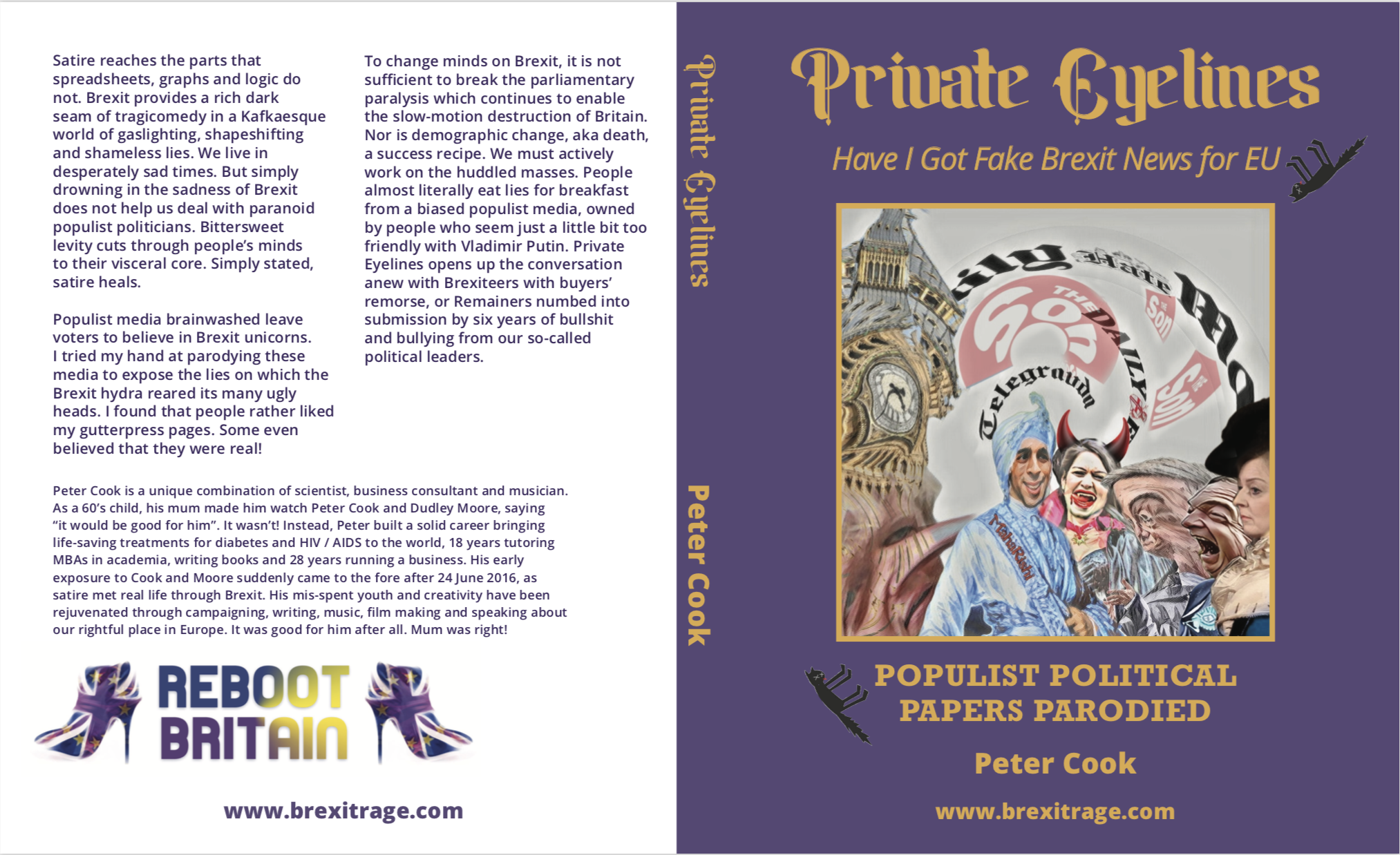
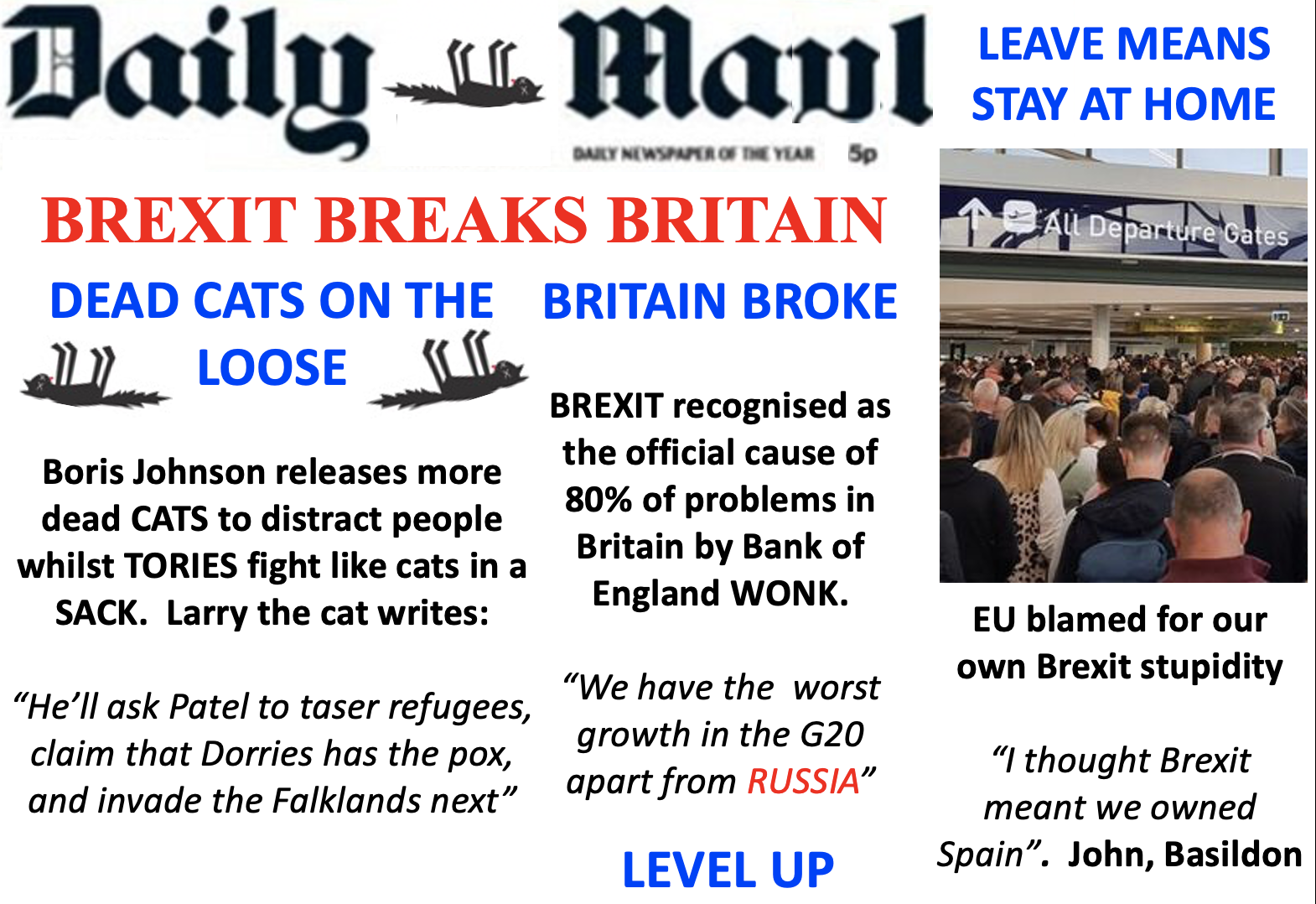
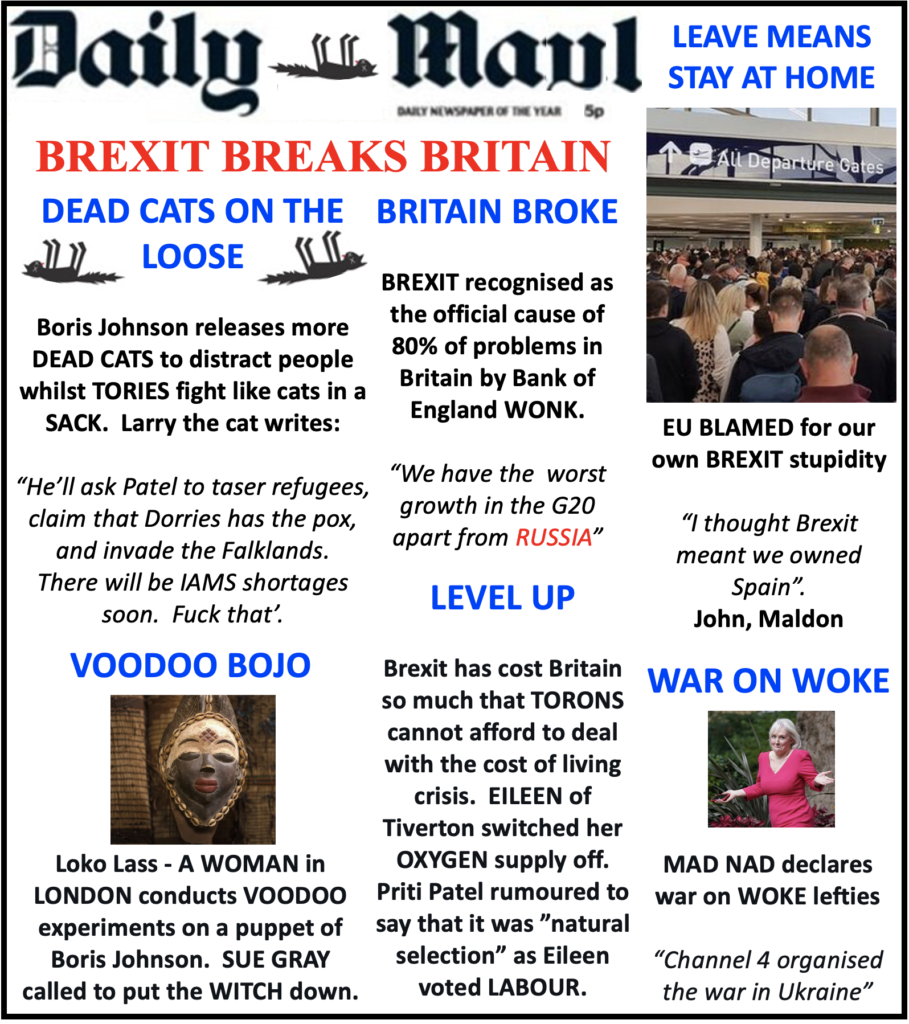
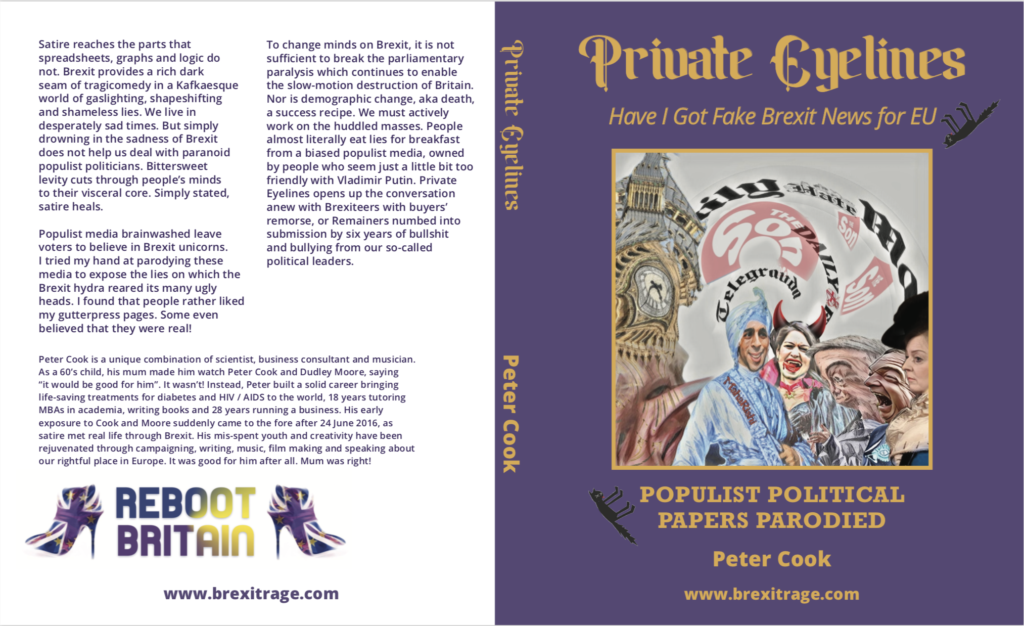
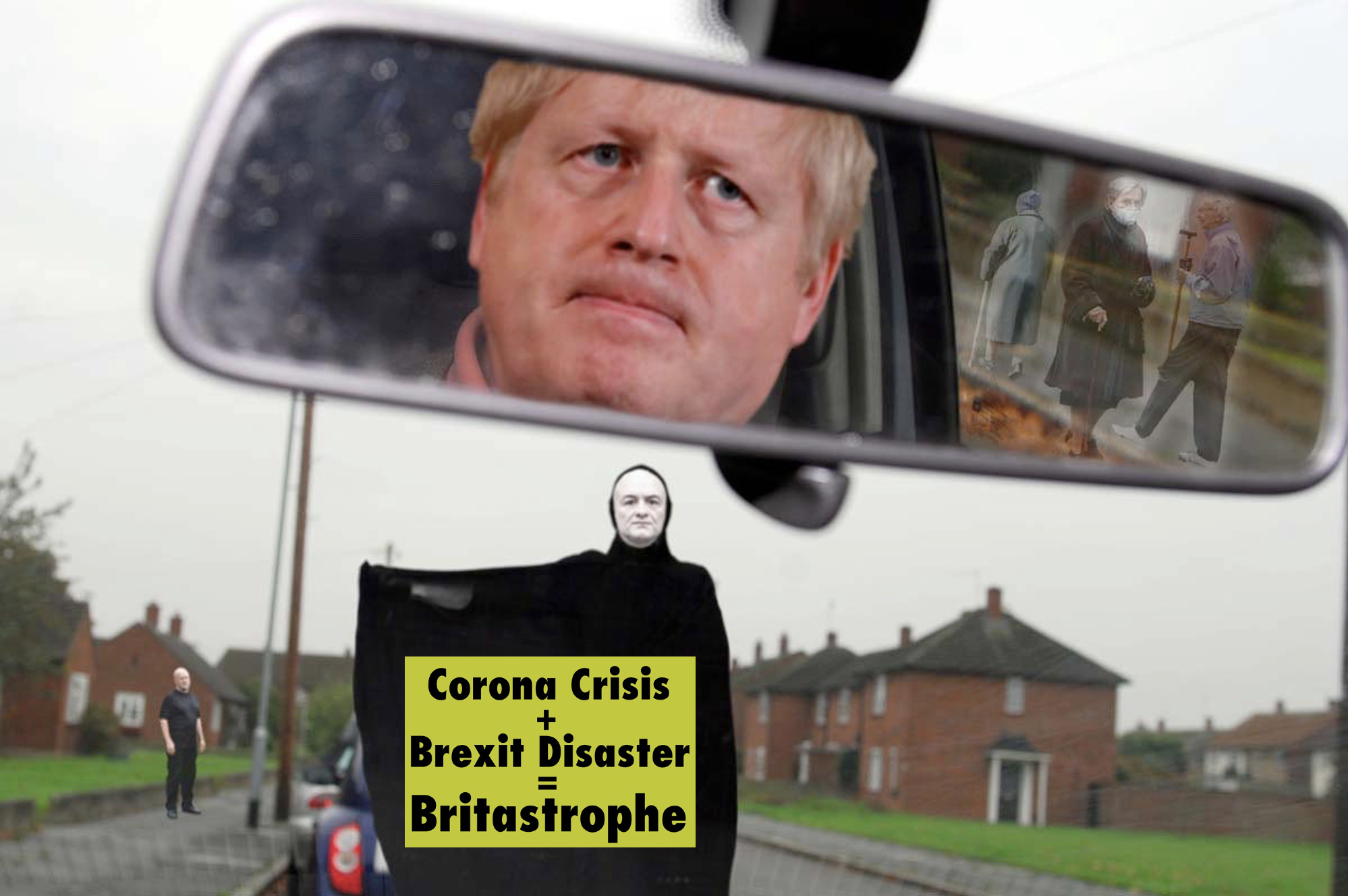
Brexit Broke Britain – official – see the Daily Maul. This is taken from our forthcoming book Private Eyelines : Have I Got Fake Brexit News for EU.


Brexit Broke Britain – official – see the Daily Maul. This is taken from our forthcoming book Private Eyelines : Have I Got Fake Brexit News for EU.


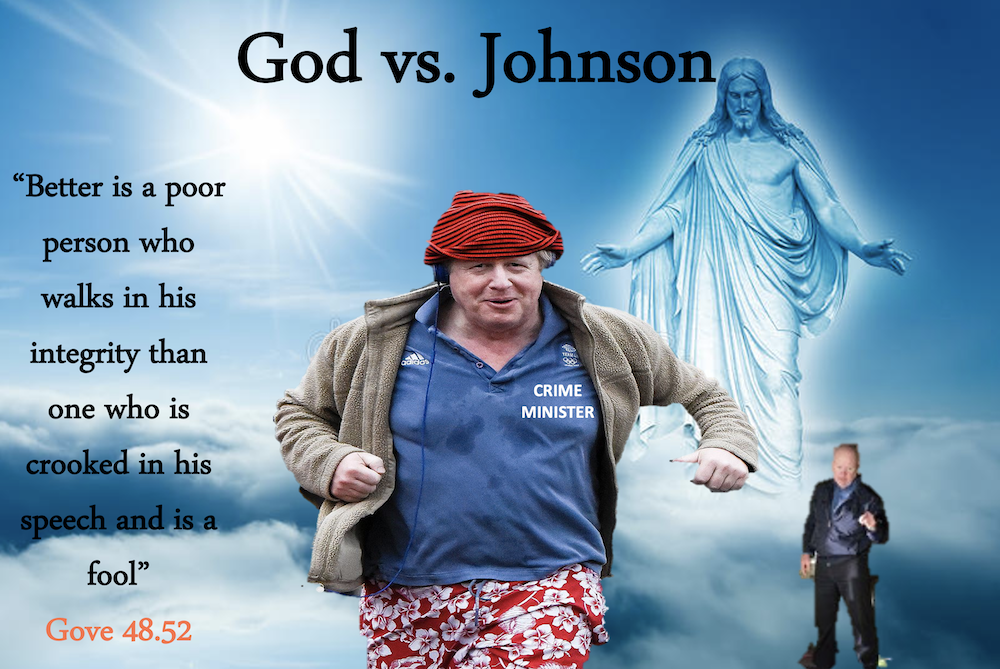
It’s been a week of car crash events with Boris Johnson. Somewhat unbelievably he was asked to deliver the reading at St Paul’s Cathedral on the occasion of the Queen’s jubilee. We reconsidered his speech through the values espoused by the Bible and its apostles : Mogg, Truss, Dorries, Madonna et al. This was the result. For complete clarity, we felt sorry for the Queen having to put up with Johnson and Brexit. Whatever your views on the monarchy, the Queen’s 70 years of service stand in stark contrast to Johnson’s spirit of self-service. Watch the 2 minute video and read the “Tory Bible quotes” below:

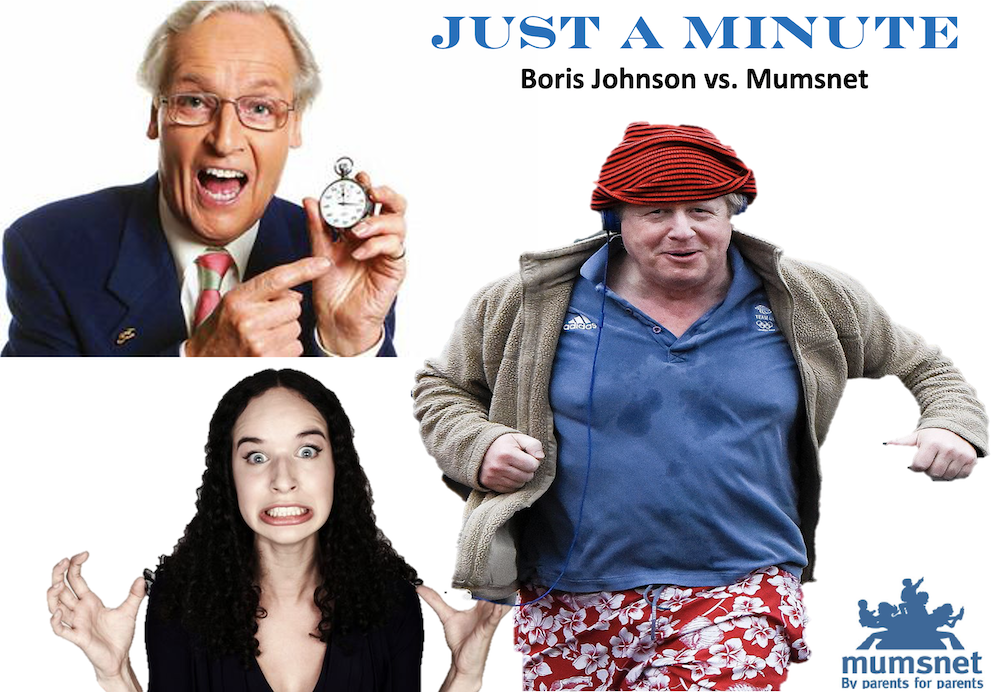
I did an analysis of the car crash Mumsnet v Boris Johnson interview using the medium of the BBC Radio 4 programme “Just a Minute”, with apologies to Nicholas Parsons.
Johnson is doing the reading at St Paul’s today. Apart from talking about honesty and thou shalt not commit adultery, his reading will mainly consist of Rule Brittania, Rule Boris, spaff-waff, bazookas, Jubilee, jubilation, jubinobs party, no party, our party, my party, sovereignty … balderdash, bunkum, hokum, pokum, where’s Carrie, who’s Carrie, ah Carrie you make me feel so young Jennifer, sorry Carrie, God save me, I mean God Save the Queen; whilst roughing up his mop (hair, not wife or current lover 🤮🤮🤮) With thanks to Jackie Brook and BillieJoeMcAll on Twitter.

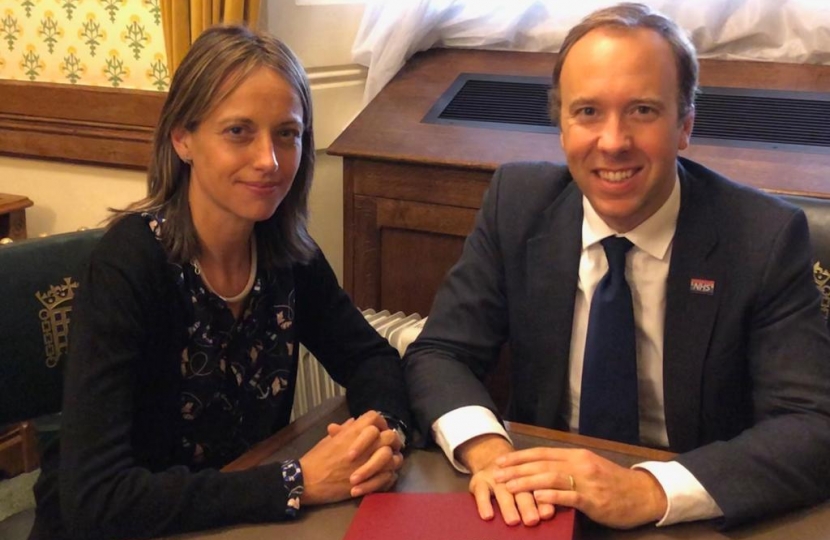
People say, what’s the point of writing to MPs? Well, other people read the letters. It informs their views on whether they are going to lose elections and so on. Everything counts. Here’s a cracker from one of our team. Please use of modify the letter to write to your MP. Find your MP email address at Write to Them.
Dear Ms Whately,
The Sue Gray report has now been published, so I would now like to hear your thoughts.on the matter.
We knew before the report was issued that the rules that applied to the general population were completely ignored by the PM.
It now turns out that the extent of rule breaking was far worse than originally thought.
We, the UK population, now know with absolute certainty that the PM is a liar, so I want to know if he has your continued support?
If you do still support him, I would like to know why? I sincerely hope that you don’t, as this will make you complicit in the corruption and law-breaking.
The PM has said he will not resign, so do you think that a fine from the police for his law-breaking is an appropriate consequence for his actions?
I hope I get something better than a stock reply from you. This is important, and a whitewash of what has been happening at the heart of our government is unacceptable.
As my elected MP, your integrity is under very close scrutiny.
Yours sincerely
Dr. Bob
Nothing succeeds better than the glare of public transparency. If you cannot get any satisfaction from your MP in private, Tweet them in public or send the letter to your local newspaper or radio station. While we are here, read our latest newsletter and join us on Saturday 28 May in Brighton or online via ZOOM.

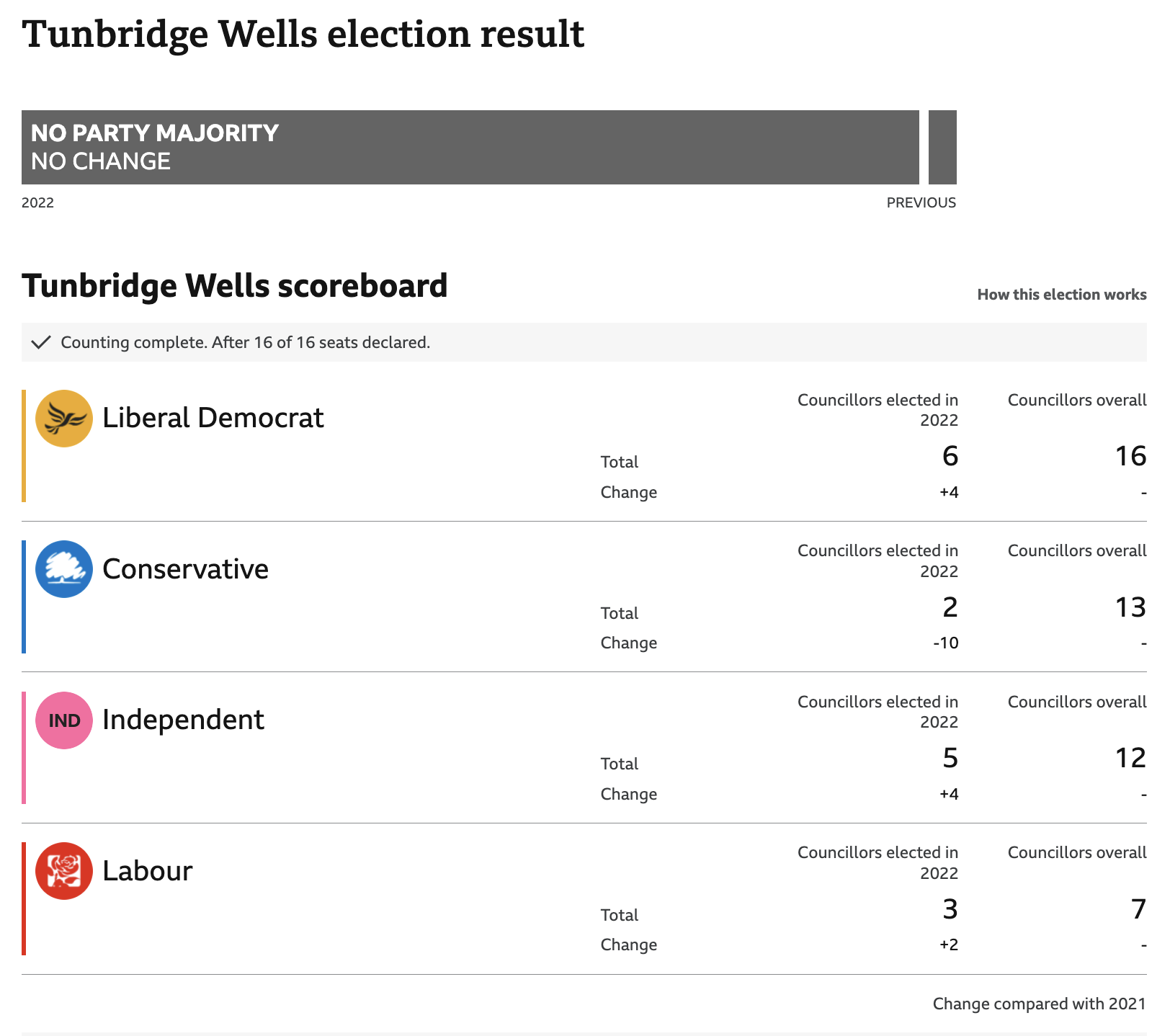
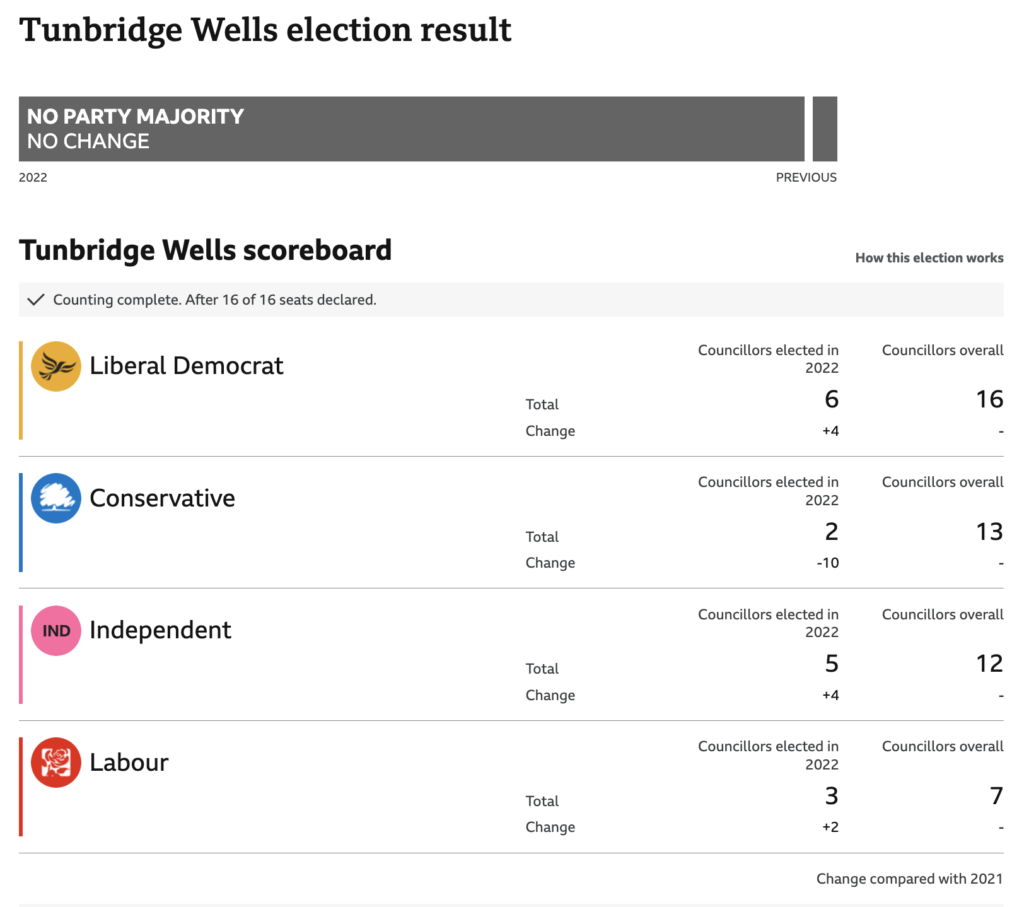
Guest article from Jean-Pierre Feyaerts on electoral reform. In the wake of some seismic changes to the political landscape in Britain it is time to consider this. I’m especially delighted that Reboot Britain contributed to the loss of 10 Tory councillors in Royal Tunbridge Wells and this demonstrates that we can still achieve impact with a faulty electoral system. TEN !!!

People, even in England, are finally starting to see the limitation of the old fashion FPTS electoral system.
In principle that system, especially at the end of the Middle Age and Renaissance made sense when it was very important to safeguard local interests, with a special interest to the financing of wars and more generally the public finances.
With time, the system was regarded as safeguarding rather stable majorities in Parliament, at least for the duration of a legislature and avoid the need to have repeated elections before the end of the said legislature.
One (if not the major) shortcoming of the system is that it provides an over representation of a part of the population. Furthermore, the culture of compromise was replaced by the law of the strongest (with derivation to the spoiling system, like in the USA).
For the British citizen however (and probably more for the English citizen) it remains difficult to accept a proportional system and even more difficult to find an agreement on a type of proportionality (for example as used for the former election of the British members of the European Parliament).
In theory, the elected members of the Parliament (of the House of Commons), are there to represent the citizen of their constituency, not only those who voted for them but any citizen of the constituency, regardless of its preferred party. In practice, they are just the local representative of a doctrine (which use to differ from the manifesto of the party). If this is the case, the approach of one single representative has no more sense.
At least, for an interim period, it does not seem possible to move to the current political system to a political system adapted to the XXIst century (rather than the end of the XIXth – beginning of the XXth) in one stage. UK need at least to adopt a phased approach.
A rather simple one, but not used elsewhere, to my best knowledge, would be to divide the number of constituencies by two and to elect two representatives instead of one. As such, it is easy to understand, does not require too much changes (except grouping the current constituencies by groups of 2[1]).
The difference with the current system is that rather the first past the post, here it would be the two first past the post[2].
This is simple, but it changes a lot for the strategy of the parties and may give more importance to local interests.
British (in particular English) have no tradition and expertise on how to find agreements and compromises and it will take surely more than one legislature to can be accustomed to it, and the same is even more true for the voters! The experience with the Eastern European countries for returning to democracy proves that both categories needs to learn how to behave in such new environment but it cold be easier than the reform proposed in 2011. Britain needs electoral reform. It will be difficult all the while both sides of our binary politics believe they can win, but Thursday’s local elections have disrupted the cosy arrangement.
[1] In real exceptional cases, a constituency with one single representative could be envisaged or a constituency grouping three former ones with eventually, for one legislature, 3 representatives as a transitional measure)
[2] Possibly, this is the case for one or another State of the USA for the Senate election.

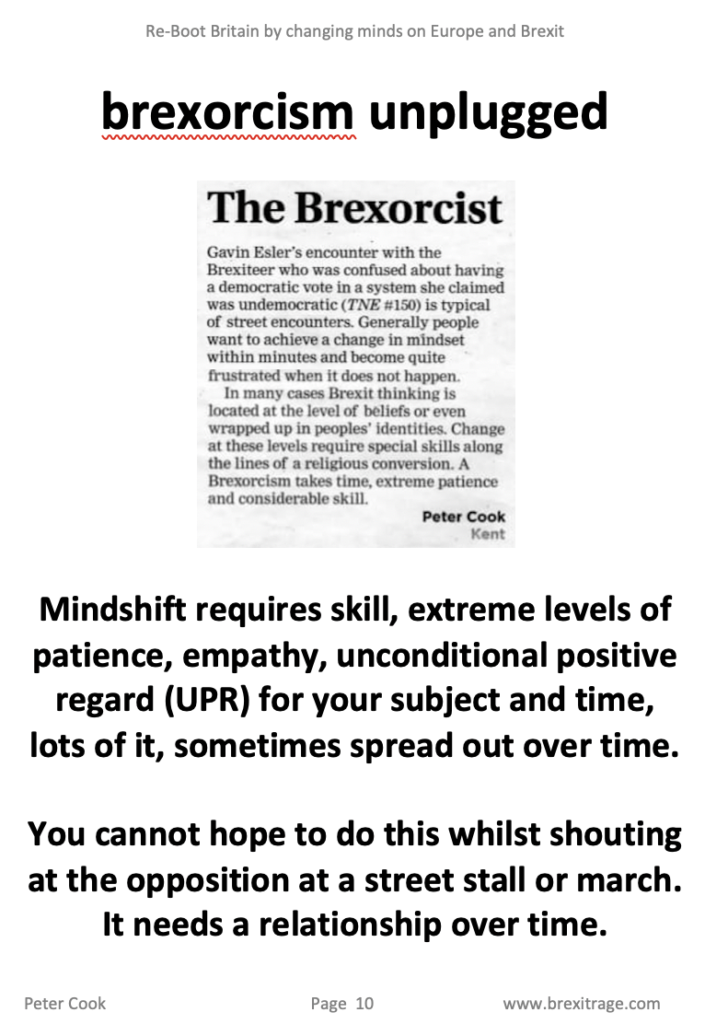
In the last few days I have been practising the gentle art of “brexorcism” on the street whilst campaigning to get the Tories out. These brief encounter stories are examples of what you can expect in my latest book on the subject in the story section. A brexorcism takes time, patience and skill, but these examples demonstrate how such things can be quite brief in some circumstances.
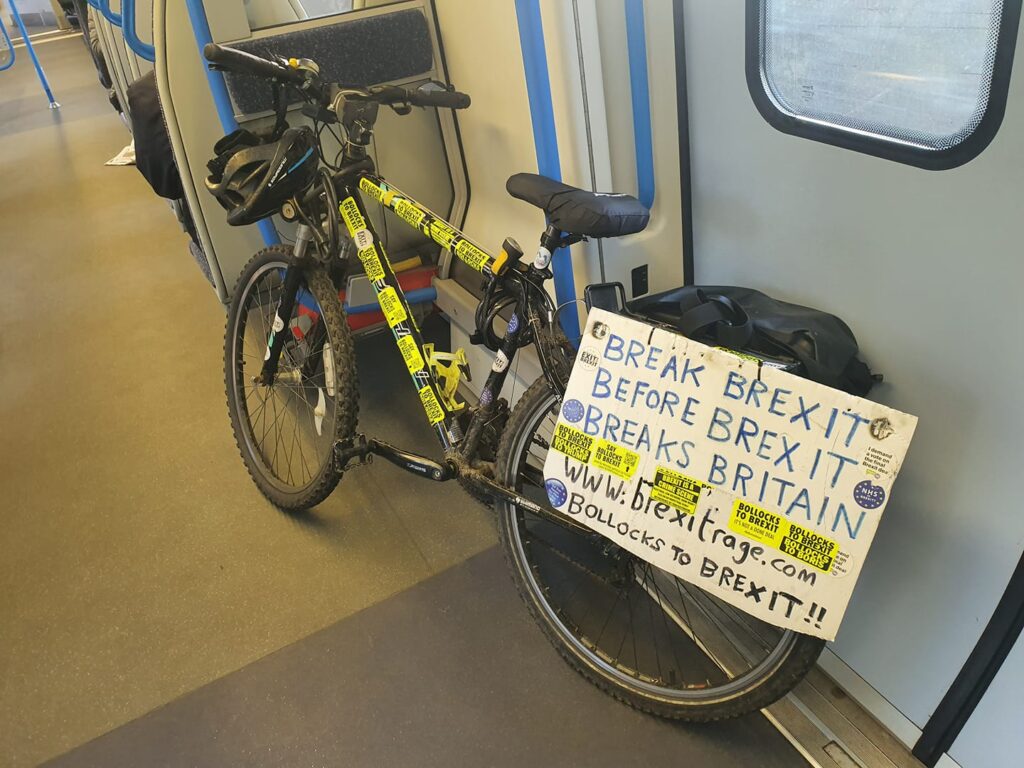
I was late to catch a train from Strood and deposited my bicycle at the barrier to buy a ticket. The staff member had studied my bike which I use to trigger conversations about Brexit. On my return I found I had a few spare minutes as the train was late. Sam began the conversation:
SAM: “I take it you are against Brexit?”
ME: “Er, yes”.
SAM : “I’m afraid I voted for it”.
ME: “Well, people had many reasons”.
SAM: “I doubt you will be able to guess mine”.
ME: Well, let me see, was it the £350 million for the NHS? Maybe the idea of sticking it to Cameron? Or taking back control of our borders? or something else?”
SAM: “None of these – my wife is from the Philippines – she works in the NHS and had to pay £11 000 to get her into the UK. I feel sick as a dog as I now realise that Brexit has not solved this problem”.
ME: Well, I am so impressed that you told me, that is brave”.
SAM: “If I ever get the chance to go back on this decision I will”.
ME: “Thank you so much. I’m working on the case”.
We shook hands and I went on my way. I sense that he wanted to test my reaction to his ‘confessional’ and he was pleased with the result. In the book I show the methodologies behind the conversation. Key to my conversation was the bike which acts as the conversation starter and, of course, what I call UPR or unconditional positive regard in the book.

On this occasion I was with a group of young people at an open mic jam session (my son’s friends). One of their circle opened up (he knows my views on Brexit but I’d never met him before):
“I’m from Italy but I’ve lived here for about 10 years. I’ll be brutally honest. I don’t give a fuck about anyone else. Why should I? I’m 23 and all I care about is earning a big pile of cash and having a life”.
I decided to offer lots of UPR by saying that I understood why he would think like that at his age. He admitted that he might think differently if he had kids (his girlfriend was with him – from her body language, I detected that she did not fully agree with him about his self centred view of life).
ME: “I completely understand your viewpoint. We adults have ruined the planet but I personally have not given up on planet earth”.
I then showed them this video below, explaining that this was why I continue to give a fuck about my fellow citizens, regardless of their viewpoints. It made a deep impact, especially on his girlfriend. I considered that this was enough as our first brief encounter and left them to consider what I’d said. Sometimes Brexorcisms needed to be left unfinished to allow for a period of reflection … The other important factor in this interaction was the social nature of the dialogue. He had 3 of his peer group sitting at the table. Peer pressure is more important than hierarchy in social herds.

We want to explain a long term project to send a potent message to Brexit supporting MPs that Brexit Doesn’t Pay. We will do this by damaging the majorities held by Brexit supporting MPs in Parliament by systematically engaging their constituents in conversation about their record nationally and locally, through information leaflets and on social media. We plan to do this as ‘non party campaigners’ and will offer no guidance as to how people vote. We will just ask them not to vote Tory. By doing this we will leaven their majorities and allow other political parties to do their best.
We have a database that identifies a number of MPs who have:
Find the database at Google Drive. Add your name and mail your details to peter@academy-of-rock.co.uk to help lead the project in your local area.
| COUNTY | Constituency | MP first name | MP surname |
| SOUTH | |||
| Hertfordshire | Hitchin and Harpenden | Bim | Afolami |
| Welwyn Hatfield | Grant | Shapps | |
| Stevenage | Stephen | McPartland | |
| East Sussex | Lewes | Maria | Caulfield |
| Hampshire | Aldershot | Leo | Docherty |
| Fareham | Suella | Braverman | |
| New Forest West | Desmond | Swayne | |
| North East Hampshire | Ranil | Jayawardena | |
| North West Hampshire | Kit | Malthouse | |
| Portsmouth North | Penny | Mordaunt | |
| Southampton, Itchen | Royston | Smith | |
| Kent | Dartford | Gareth | Johnson |
| Dover | Natalie | Elphicke | |
| Gravesham | Adam | Holloway | |
| Sittingbourne and Sheppey | Gordon | Henderson | |
| South Thanet | Craig | Mackinlay | |
| Gillingham and Rainham | Rehman | Chishti | |
| Oxfordshire | Witney | Robert | Courts |
| Surrey | Carshalton and Wallington | Elliot | Colburn |
| Epsom and Ewell | Chris | Grayling | |
| Reigate | Crispin | Blunt | |
| Esher and Walton | Dominic | Raab | |
| Surrey Heath | Michael | Gove | |
| Berkshire | Wokingham | John | Redwood |
| Buckinghamshire | Wycombe | Steve | Baker |
| Isle of Wight | Isle Of Wight | Bob | Seely |
| West Sussex | Crawley | Henry | Smith |
| East Worthing and Shoreham | Tim | Loughton | |
| Horsham | Jeremy | Quin | |
| Bedfordshire | Mid Bedfordshire | Nadine | Dorries |
| WEST | |||
| Avon | North East Somerset | Jacob | Rees-Mogg |
| North Somerset | Liam | Fox | |
| Weston-Super-Mare | John | Penrose | |
| Cornwall | North Cornwall | Scott | Mann |
| South East Cornwall | Sheryll | Murray | |
| St Austell and Newquay | Steve | Double | |
| Devon | Newton Abbot | Anne Marie | Morris |
| Dorset | Christchurch | Christopher | Chope |
| Mid Dorset and North Poole | Michael | Tomlinson | |
| Somerset | Somerton and Frome | David | Warburton |
| Yeovil | Marcus | Fysh | |
| NORTH | |||
| Northumberland | Blyth Valley | Ian | Levy |
| Berwick-Upon-Tweed | Anne-Marie | Trevelyan | |
| Humberside | Cleethorpes | Martin | Vickers |
| Haltemprice and Howden | David | Davis | |
| North Yorkshire | Thirsk and Malton | Kevin | Hollinrake |
| West Yorkshire | Morley and Outwood | Andrea | Jenkyns |
| Shipley | Philip | Davies | |
| South Yorkshire | Penistone and Stocksbridge | Miriam | Cates |
| SCOTLAND | |||
| Scotland | Moray | Douglas | Ross |
| West Aberdeenshire and Kincardine | Andrew | Bowie | |
| LONDON | |||
| Greater London | Chipping Barnet | Theresa | Villiers |
| Kensington | Felicity | Buchan | |
| Islington North | Jeremy | Corbyn | |
| Hornchurch and Upminster | Julia | Lopez | |
| Uxbridge and South Ruislip | Boris | Johnson | |
| Sutton and Cheam | Paul | Scully | |
| EAST | |||
| Norfolk | Great Yarmouth | Brandon | Lewis |
| South Norfolk | Richard | Bacon | |
| Suffolk | Suffolk Coastal | Thérèse | Coffey |
| Cambridgeshire | Huntingdon | Jonathan | Djanogly |
| Essex | Braintree | James | Cleverly |
| Epping Forest | Eleanor | Laing | |
| Harwich and North Essex | Bernard | Jenkin | |
| Maldon | John | Whittingdale | |
| Rayleigh and Wickford | Mark | Francois | |
| Rochford and Southend East | James | Duddridge | |
| Saffron Walden | Kemi | Badenoch | |
| Thurrock | Jacqueline | Doyle-Price | |
| Chingford and Woodford Green | Iain | Duncan Smith | |
| Witham | Priti | Patel | |
| WALES / NORTH WEST | |||
| Clwyd | Clwyd West | David | Jones |
| South Glamorgan | Vale of Glamorgan | Alun | Cairns |
| Mid Glamorgan | Bridgend | Jamie | Wallis |
| Lancashire | Fylde | Mark | Menzies |
| Merseyside | Southport | Damien | Moore |
| Cheshire | Macclesfield | David | Rutley |
| Greater Manchester | Bolton West | Chris | Green |
| Bury North | James | Daly | |
| Bury South | Christian | Wakeford | |
| Bolton North East | Mark | Logan | |
| Heywood and Middleton | Chris | Clarkson | |
| Blackley and Broughton | Graham | Stringer | |
| Hazel Grove | William | Wragg | |
| MIDLANDS | |||
| Northamptonshire | Corby | Tom | Pursglove |
| Daventry | Chris | Heaton-Harris | |
| Northampton South | Andrew | Lewer | |
| South Northamptonshire | Andrea | Leadsom | |
| Wellingborough | Peter | Bone | |
| Mansfield | Ben | Bradley | |
| Nottinghamshire | Gedling | Tom | Randall |
| Staffordshire | Lichfield | Michael | Fabricant |
| South Staffordshire | Gavin | Williamson | |
| Stone | William | Cash | |
| Tamworth | Christopher | Pincher | |
| Stoke-On-Trent North | Jonathan | Gullis | |
| Warwickshire | North Warwickshire | Craig | Tracey |
| West Midlands | Dudley South | Mike | Wood |
| Halesowen and Rowley Regis | James | Morris | |
| Solihull | Julian | Knight | |
| Hereford and Worcester | Bromsgrove | Sajid | Javid |
| North Herefordshire | Bill | Wiggin | |
| Redditch | Rachel | Maclean | |
| Shropshire | Shrewsbury and Atcham | Daniel | Kawczynski |
| NORTHERN IRELAND – DUP | |||
| County Antrim | Lagan Valley | Jeffrey | Donaldson(Sir) |
| South Antrim | Paul | Girvan | |
| North Antrim | Ian | Paisley(Jr) | |
| East Antrim | Sammy | Wilson | |
| County Down | Upper Bann | Carla | Lockhart |
| Belfast East | Gavin | Robinson | |
| Strangford | Jim | Shannon | |
| County Londonderry | East Londonderry | Gregory | Campbell |
In turn, we will supply support through bringing the team leaders together, supplying leaflets at various points and providing training in the gentle art of Brexorcism. We have just completed our our second book on the subject:
Study the list of locations and find people who will be willing and support to lead the campaign in the different areas. Both in terms of your real life contacts and via social media. When you get someone who is interested, pl send their details over to me via e-mail reboot@academy-of-rock.co.uk

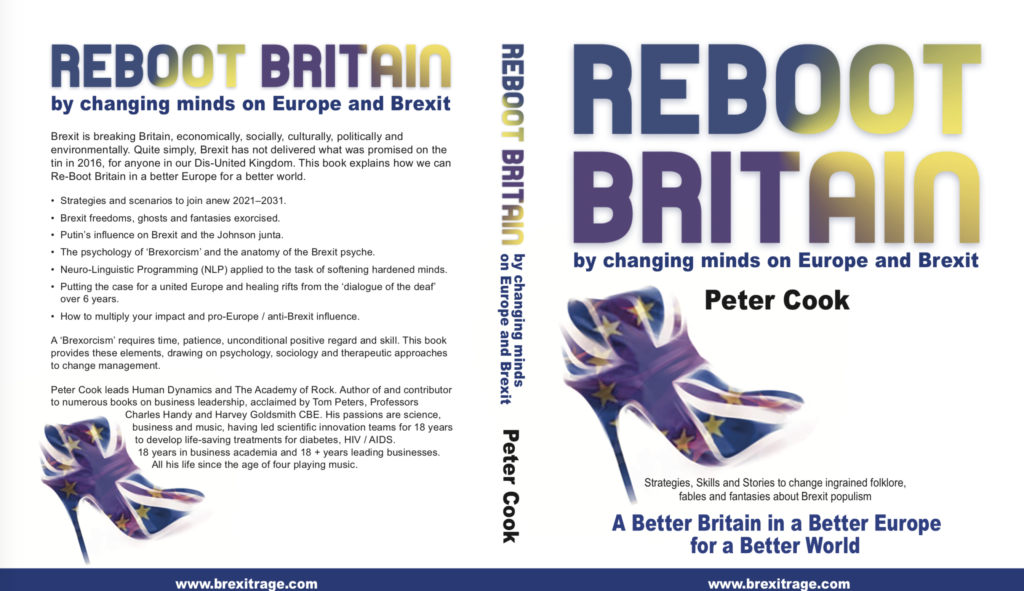
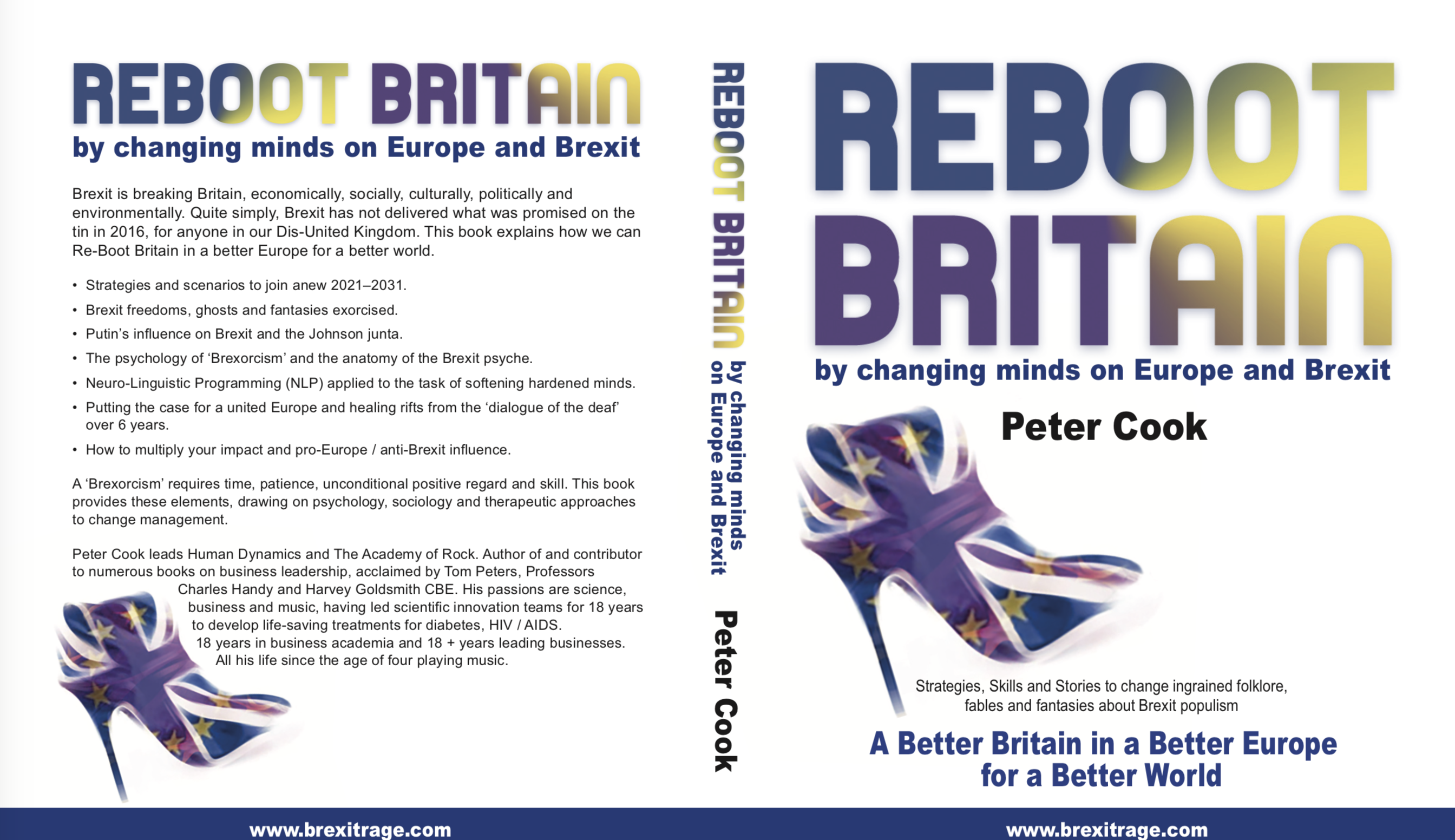
Finally it’s out !! The new book on Changing minds on Europe and Brexit is here. Click to buy on Amazon or contact me by e-mail via peter@academy-of-rock.co.uk for your personal copy. If you are a sponsor of Re-Boot Britain, you can get a heavily discounted copy to just cover costs.
To find out what it’s all about, join me on Thursday 7 April at 7.00 pm GMT via ZOOM. Here’s the book blurb to give you an insight as to why you will want to buy a copy.
Brexit has broken Britain, economically, socially, culturally, politically and environmentally. Quite simply, Brexit has not delivered what was promised on the tin in 2016, for anyone in our DisUnited Kingdom. This book explains how we may join anew for a better Britain in a better Europe for a better world.
A ‘Brexorcism’ requires time, patience, unconditional positive regard and skill. This book provides these elements, drawing on a range of approaches to change management from psychology, sociology and therapeutic approaches.
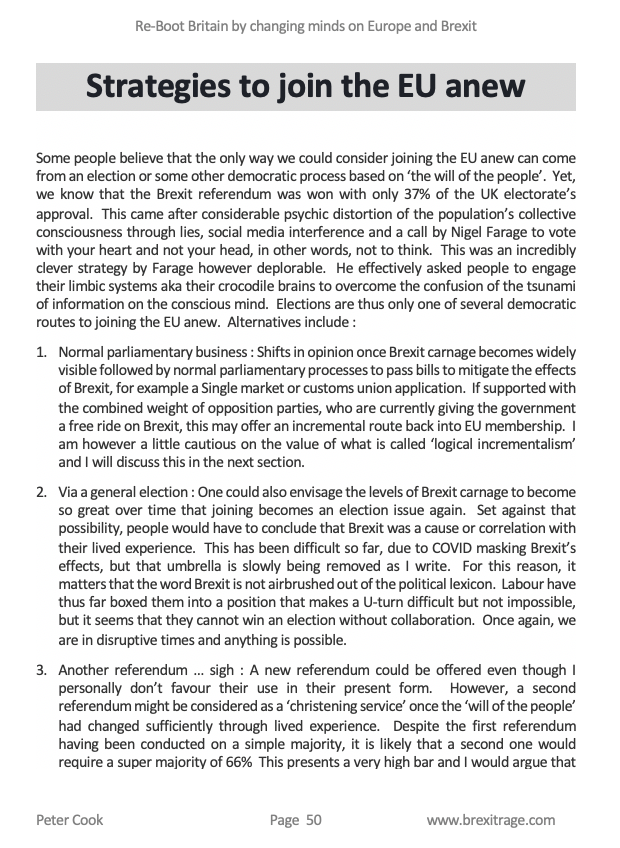
Here are a few samples to whet your appetite:


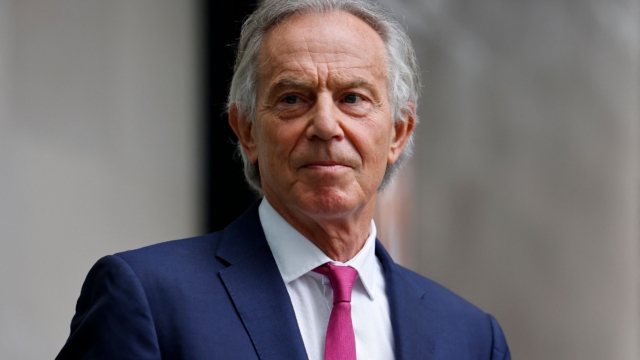
Continuing our theme on censorship, this piece, written by Alan Bullion was censored by Byline Times, presumably as it criticises the left. Whilst I don’t agree fully with all that it says, I would defend Alan’s right to say it to the hilt. All leaders and political systems have faults and some tend to believe that they are messiah like. Blair is not immune to our failings as humans and in this article, Alan argues that Tony Blair’s commitment to representative democracy may have set up the conditions for UKIP / Farage to gain oxygen and fuel the Brexit debate. As always at Re-Boot Britain, comments are welcome and free. In the words of George Michael, listen without prejudice.
Tony Blair is perhaps the most controversial Labour Prime Minister of the post-war period. Most come to bury not praise his significant legacy and reputation, especially since the furore surrounding the Iraq war and its subsequent aftermath. Just this year we have had an online petition attracting millions of signatures opposing his proposed knighthood, both from left and right-wing critics.
Indeed, it is often forgotten brushed aside that Blair led his party to a huge majority under the ‘New Labour’ project in 1997, followed by two more convincing general election victories, one after the Iraq war.
In order to better understand how the Brexit referendum of 2016 and its aftermath occurred, I have analysed the timeline and impact of several key events under the Blair/Brown governments which led up to those fateful events of Britain leaving the EU.
Of course, I am not suggesting that these actors alone were to blame. Farage, Cameron, Johnson, Cummings and several others – all privileged public-school educated white men – clearly played their part.
But as I will argue below, the actions of Blair and others around him led to a process where an already sceptical British public became increasingly critical of the EU and its perceived ills. This resulted in the calamitous narrow vote in favour of departure in 2016.
The fringe cause of Euroscepticism under Farage and the UK Independence Party (UKIP) had been previously the province of right-wing fanatics and Home Counties pub bores.
The first touchstone in our trajectory was when Blair went along with the proposal by the then Lib Dem leader Paddy Ashdown to introduce proportional representation in the 1999 elections to the European Parliament. This led UKIP and its leader Nigel Farage to gain a mainstream and increasingly influential foothold in politics. Blair had not been won over to PR, rather it was a political compromise to avoid the introduction of PR to elections for the House of Commons. or local government.
Ironically, while Farage was sceptical about winning an in/out Brexit referendum, Blair, along with Ashdown, Cameron and Clegg, were overwhelmingly enthusiastic. They severely underestimated public fears, stoked by Farage, that such a binary vote would result in disaster on a huge turnout, driven by immigration and issues such as ‘sovereignty’.
In June 2014, the novelist and former Labour acolyte Robert Harris, while publicising his book The Ghost, described Blair as a ‘tragic narcissist with a messiah complex’, who would be doomed to live a ‘tragic life’ and face trial at the International Criminal Court for alleged war crimes.
There was an element of truth in this harsh judgement. Both Blair and his barrister wife Cherie were often accused of being ‘money mad’, rushing around the world advising dubious autocrats on how to improve their image.
There might well have been an element of neediness there, which others such as former Labour MP Leo Abse psychologically analysed in The Man Behind the Smile. Indeed, Blair was well suited to the world of celebrity politics and self-publicists such as Kim Kardashian.The tragedy was that he would never be able to completely resurrect his image after the Iran/Iraq war, despite his other considerable achievements at winning elections.
The truth is inevitably more complex. In my 1996 article ‘What Blair Believes’, published in the Jewish Quarterly, I argued that Blair was driven by a simplistic dualist ideology devised by Anglican mystic John Macmurray, which he imbibed while at university. This belief system basically sees protagonists in international politics as either essentially ‘good’ or ‘evil’, thereby explaining Blair’s support for US President Bush in Iraq.
Blair was highly active on the EU. For example, he was instrumental in establishing the cross-party grouping Britain in Europe, specifically to argue the case for the UK signing up to the Euro (single currency) and the European Monetary Union, via a popular referendum. This came to a crescendo in the wake of the sudden death of Princess Diana in August 2007.
There were serious differences over this issue between Blair and Chancellor Gordon Brown. This was further exemplified by the clash over the Treaty of Lisbon and the Court of Justice of the European Union (ECJ), which was signed in December 2007 and came into force two years later under Brown.
Originally a referendum was promised by Labour Foreign Secretary Jack Straw for Spring 2006, but that never happened, adding more fire to the UKIP fray that the court was increasingly compromising British sovereignty.
In May 2004, Blair, supported by Home Office minister David Blunkett, decided to allow migrant labour from the eight Eastern European countries that would be joining the EU. Unlike the UK, other EU member states such as Germany had instead opted to impose a seven-year delay from these countries achieving full entry to work.
As these Eastern European migrants started to arrive, Blunkett went on BBC2 Newsnight to defend the policy, declaring that there was ‘no obvious upper limit on migration’. That calendar year alone there was a net increase of 350,000. Blunkett later conceded that he lost public support and made a mistake.
At the time I was visiting Kent sixth forms and colleges to make the case for remaining in the EU. Comments from working class children in those schools told stories of perceived resentment at migrants taking jobs such as cleaning, catering and car mechanics, and driving down wages.
It was in 2005 when I campaigned as a parliamentary candidate in Hammersmith and Fulham and was confronted on the doorstep by a British plumber who claimed he had been undercut by the nice Polish plumbers taken up promptly by middle-class housewives.
‘It’s all right for the likes of the Blairs, living their aloof and cosmopolitan lives in Islington and Brussels’, was the implication.
So now we come to 2022, with Tory cuts to universal benefits, rising food and fuel prices, and tax increases.
We are still talking about migrants … while there are severe shortages of food and farm labourers, lorry and bus drivers. And ironically, as the consequences of Brexit become ever more stark, arch Brexiteer Jacob Rees-Mogg has just been appointed by Johnson as minister for Brexit Opportunities. You couldn’t make it up.

There is a widespread view that we must pay more in National Insurance to cover shortfalls in social care and healthcare. All of this has been hung on the hook of COVID, as if it anaesthetises the arguments or any debate. I would like to question the notion that we must raise NI to raise £13 billion as there are many more routes to raise the required capital. In fact it would be easy for this Government to raise the capital without using the crude instrument of NI, which selectively targets those least able to pay the tax, whilst protecting old age pensioners, many of whom vote Tory. But fear not OAPs. Rishi is not paying for social care. Rather, he will be coming for your triple lock soon …
Robert Dyer coined the phrase “The Brexit Bounce”. Remember we were getting £350 million back from the EU EVERY WEEK. Do the math. That’s £18.2 BILLION every year into perpetuity. So, in one fell swoop, we can pay for social care with the Brexit Bounce, except the £350 million has not materialised.
Dido Harding spent £37 BILLION on Test and Trace, much of which was either non-existent or faulty. Let’s be generous and suppose that only 20% of the project was fictional or faulty. That’s a cool £7.4 BILLION towards the social care uplift. Then there is the PPE fraud …
Liz Truss took a lonely trip to Australia in the Government A321 Airbus at a cost of £500 000. Small beer I hear you say. But these trophy flights could help pay for the NI hike !! What’s wrong with Ryanair? Or BA if you wanted to be truly patriotic at a cost of around £4000 to Oz.
Rishi Sunak seems to have cancelled £4.3 BILLION of fraudulent COVID loans. That would be a nice contribution to the social care fund? Closing tax loopholes would make enough funds to fund good quality services not just care and allow for less taxation on those that can least afford it. With thanks to Gail Jones.
Then there are the small ticket items but yet every little helps as they say at Tesco. The No 10 wallpaper bill (£840 per roll), Priti Patel’s Eyelashes, Suitcases of wine, the Royal Yachts at a snip of £250 Million. Everything adds up.
What other spaffing options exist? Write to me in the comments and I will add your point with a credit to your input.
Brexit has cost £128 billion so far, or £727 per second. Although it would not be straightforward, stopping Brexit would give us access to all the social car,e by stopping Britain bleeding to death. Here’s a helpful chart to show what you can buy with £128 257 825 862 in case you have never thought of “how to spend it”.
Join us on Monday 07 March to Re-Boot Britain on ZOOM via RE-BOOT BRITAIN. Please RSVP.